
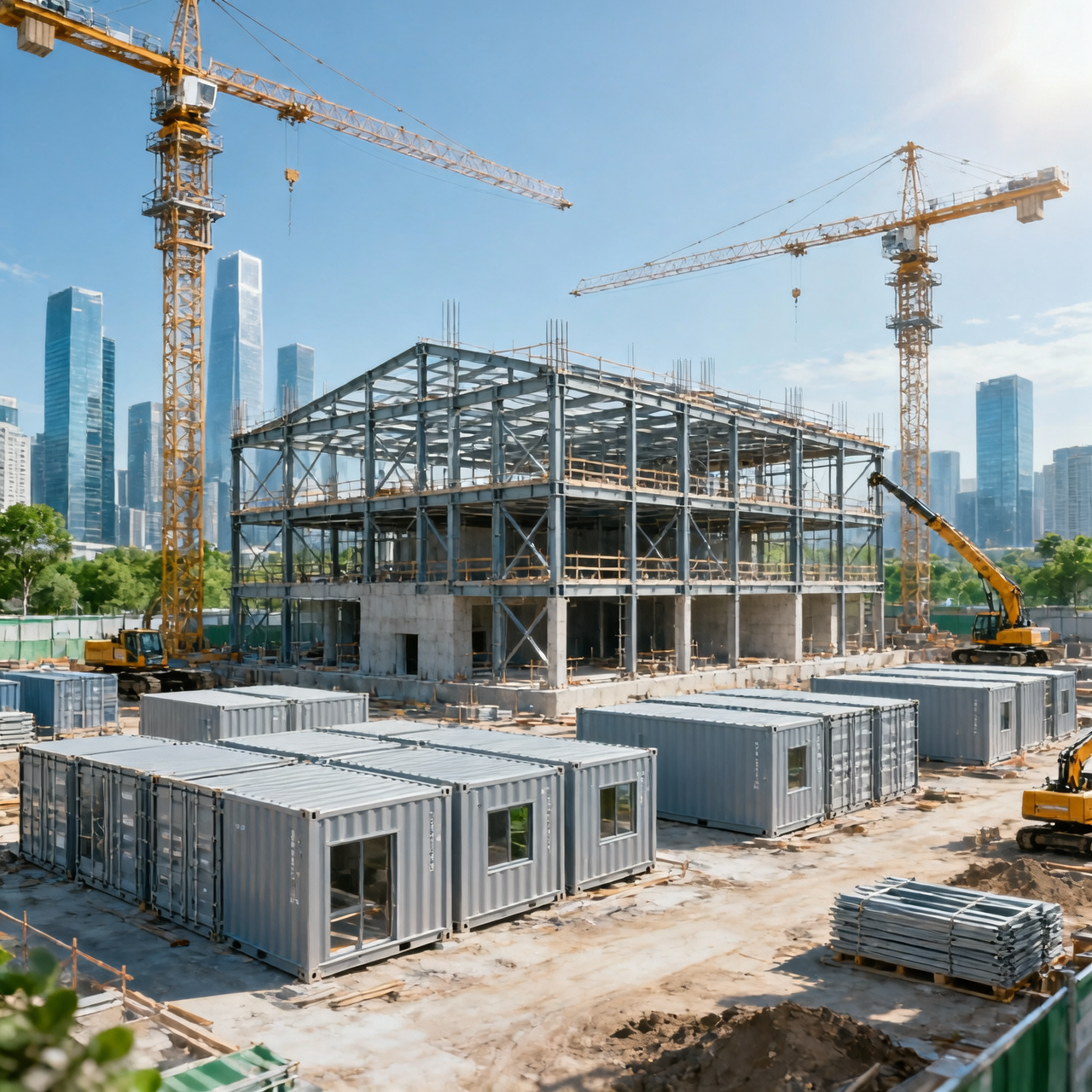
Vigorously developing prefabricated buildings has been included in the guiding opinions on promoting the reduction of construction waste.
Housing and Urban-Rural Development Departments of all provinces and autonomous regions, Housing and Urban-Rural Development (Management) Commissions of municipalities directly under the Central Government, Beijing Municipal Commission of Planning and Natural Resources, and Housing and Urban-Rural Development Bureau of Xinjiang Production and Construction Corps:
Promoting the reduction of construction waste is an important component of the construction waste management system and a crucial measure for conserving resources and protecting the environment. To effectively reduce construction waste and promote green construction and the transformation and upgrading of the construction industry, the following opinions are hereby proposed:
I. General Requirements (I) Guiding Ideology. Guided by Xi Jinping Thought on Socialism with Chinese Characteristics for a New Era, we will thoroughly implement the new development concept, establish and improve the working mechanism for reducing construction waste, strengthen the source control of construction waste, promote the transformation of the production organization mode of engineering construction, effectively reduce the generation and emission of construction waste during the engineering construction process, and continuously promote the sustainable development of engineering construction and the improvement of urban and rural living environment. (II) Basic Principles. 1. Overall Planning and Source Reduction. We will coordinate the planning, design, and construction stages of the project to prevent and reduce the generation of construction waste during the engineering construction process from the source, and effectively reduce the emission of construction waste throughout the entire life cycle of the project. 2. Adapting to Local Conditions and Systematic Promotion. Based on the specific requirements of various regions and the actual situation of engineering projects, we will integrate resources, formulate plans, and take multiple measures to systematically promote the work of reducing construction waste. 3. Innovation-Driven and Refined Management. We will promote the innovation of construction waste reduction technology and management, implement refined design and construction, and realize the classification, control and reuse of construction waste at the construction site. (III) Work Objectives.
By the end of 2020, preliminary mechanisms for reducing construction waste were established in various regions. By the end of 2025, these mechanisms will be further improved, ensuring that the amount of construction waste (excluding construction spoil and mud) discharged at new building construction sites does not exceed 300 tons per 10,000 square meters , and the amount of construction waste (excluding construction spoil and mud) discharged at prefabricated building construction sites does not exceed 200 tons per 10,000 square meters.
II. Main Measures (I) Implementing Green Planning. 1. Implementing Corporate Responsibility. In accordance with the principle of "whoever generates it, is responsible for it," the primary responsibility of construction units for reducing construction waste should be implemented. Construction units should include construction waste reduction targets and measures in bidding documents and contract texts, include construction waste reduction measures costs in the project budget, and supervise the design, construction, and supervision units to implement them. 2. Implementing New Construction Methods. Vigorously develop prefabricated buildings, actively promote steel structure prefabricated housing, and promote a construction model of factory prefabrication, assembly construction, and information management. Encourage innovative design, construction technologies and equipment, prioritize the use of green building materials, implement fully furnished delivery, and reduce the generation of construction waste on construction sites. Under the leadership of construction units, promote the application of technologies such as Building Information Modeling (BIM) in engineering design and construction, reduce "errors and omissions" in design, assist in construction site management, and improve resource utilization. 3. Adopting New Organizational Models. Promote the reform of engineering construction organization methods, guide construction units to implement general contracting and full-process engineering consulting in engineering projects , promote the architect responsibility system, strengthen the deep collaboration between design and construction, and build an organizational model conducive to promoting the reduction of construction waste. (II) Implement green design. 4. Establish the concept of the whole life cycle. Take into account the durability and sustainability of the whole life cycle of the project, and encourage design units to use high-strength, high-performance, high-durability and recyclable materials and advanced and applicable technology systems to carry out engineering design. According to the principle of "unified modules and collaborative modules", promote the standardization of functional modules and components, and reduce irregular and non-standard components . For reconstruction and expansion projects, encourage the full use of the original structure and the original electromechanical equipment that meets the requirements. 5. Improve design quality. Design units should reasonably determine the site elevation according to the topography and conduct earthwork balance demonstration to reduce the transportation of waste soil. Select a suitable structural system to reduce the irregularity of building shape. Advocate the integrated collaborative design of architecture, structure, electromechanical, decoration and landscape, and ensure that the design depth meets the construction needs and reduce design changes during construction. (III) Promote green construction. 6. Prepare special plans. Construction units should organize the preparation of a special plan for reducing construction waste at the construction site, clarifying the goals and division of responsibilities for waste reduction, and proposing specific measures for source reduction, classified management, on-site disposal, and emission control. 7. Improve design refinement and construction organization. Construction units should refine node structures and specific practices based on engineering processing, transportation, installation plans, and construction process requirements. Optimize construction organization design, rationally determine construction procedures, promote digital processing and information management, achieve precise material cutting and meticulous management, and reduce building material loss rates. 8. Strengthen construction quality control. Construction and supervision units should strictly control the quality of incoming materials and equipment according to design requirements, strictly control construction quality, strengthen quality control at each process stage, and reduce rework or repairs due to quality problems. Strengthen the protection of completed works to avoid secondary damage. 9. Improve the reuse rate of temporary facilities and reusable materials. Promote the use of standardized facilities with high reuse rates for on-site offices, dormitories, fences, gates, tool sheds, safety railings, etc. Encourage the use of modular scaffolding and formwork support systems, and promote the application of reusable materials such as aluminum formwork, metal protective netting, metal walkway panels, and prefabricated road slabs. Encourage construction units to coordinate the allocation of temporary facilities and reusable materials within a certain area. 10. Promote the combined use of temporary and permanent facilities. Construction units should fully consider the combined use of fire-fighting risers, fire pools, lighting circuits, roads, and fencing with permanent facilities to reduce construction waste generated from the demolition of temporary facilities. 11. Implement classified management of construction waste. Construction units should establish a classified collection and storage management system for construction waste, implementing classified collection, classified storage, and classified disposal. Encourage detailed classification of construction waste with end-of-life disposal as the guiding principle. It is strictly prohibited to mix hazardous waste and domestic waste with construction waste. 12. Guide the reuse of construction waste on construction sites. Construction units should make full use of leftover materials such as concrete, steel bars, formwork, and perlite insulation materials, and, under the premise of meeting quality requirements, process them into various engineering materials according to actual needs for recycling. Where on-site utilization is not feasible, waste should be promptly transferred to a construction waste disposal site for resource recovery and reuse, in accordance with regulations. 13. Reduce construction waste emissions at construction sites. Construction units should monitor and track the amount of construction waste generated in real time and take timely and targeted measures to reduce emissions. The use of on-site sediment separation and slurry dewatering pretreatment processes is encouraged to reduce the discharge of construction waste and slurry.
III. Organizational Safeguards
(I) Strengthen overall management. Provincial-level housing and urban-rural development departments should improve the working mechanism and policy measures for reducing construction waste, and incorporate construction waste reduction into the local green development and ecological civilization construction system. Local environmental sanitation departments at all levels should coordinate the establishment and improvement of the construction waste management system, further strengthen the management of construction waste collection, transportation, resource utilization and disposal, and promote the improvement of construction waste management capabilities. (II) Actively guide and support. Local housing and urban-rural development departments at all levels should encourage technological and management innovation in construction waste reduction and support the rapid transformation and application of innovative achievements. Determine the emission limits for construction waste and establish corresponding incentive mechanisms for projects with low or zero emissions. (III) Improve the standard system. Provincial-level housing and urban-rural development departments should accelerate the formulation and improvement of relevant standards for the classification, collection, statistics, disposal and recycling of construction waste at construction sites, and provide technical support for the reduction work. (IV) Strengthen supervision and guidance. Local housing and urban-rural development departments at all levels should incorporate construction waste reduction into the content of civilized construction and encourage the establishment of a system for publicizing the amount of construction waste emitted at construction sites. Implement the construction waste reduction guidance manual, carry out demonstration and guidance projects for construction waste reduction, and promote the exchange of experience in construction waste reduction. (V) Increase publicity efforts. Local housing and urban-rural development authorities at all levels should give full play to the guiding role of public opinion and the supervisory role of the media, widely publicize the importance of reducing construction waste, popularize basic knowledge of construction waste reduction and on-site reuse, and enhance the resource conservation and environmental awareness of participating units and personnel.
Ministry of Housing and Urban-Rural Development of the People's Republic of China
May 8 , 2025
Related Posts
Send Us A Message